By: Jessica L Graham
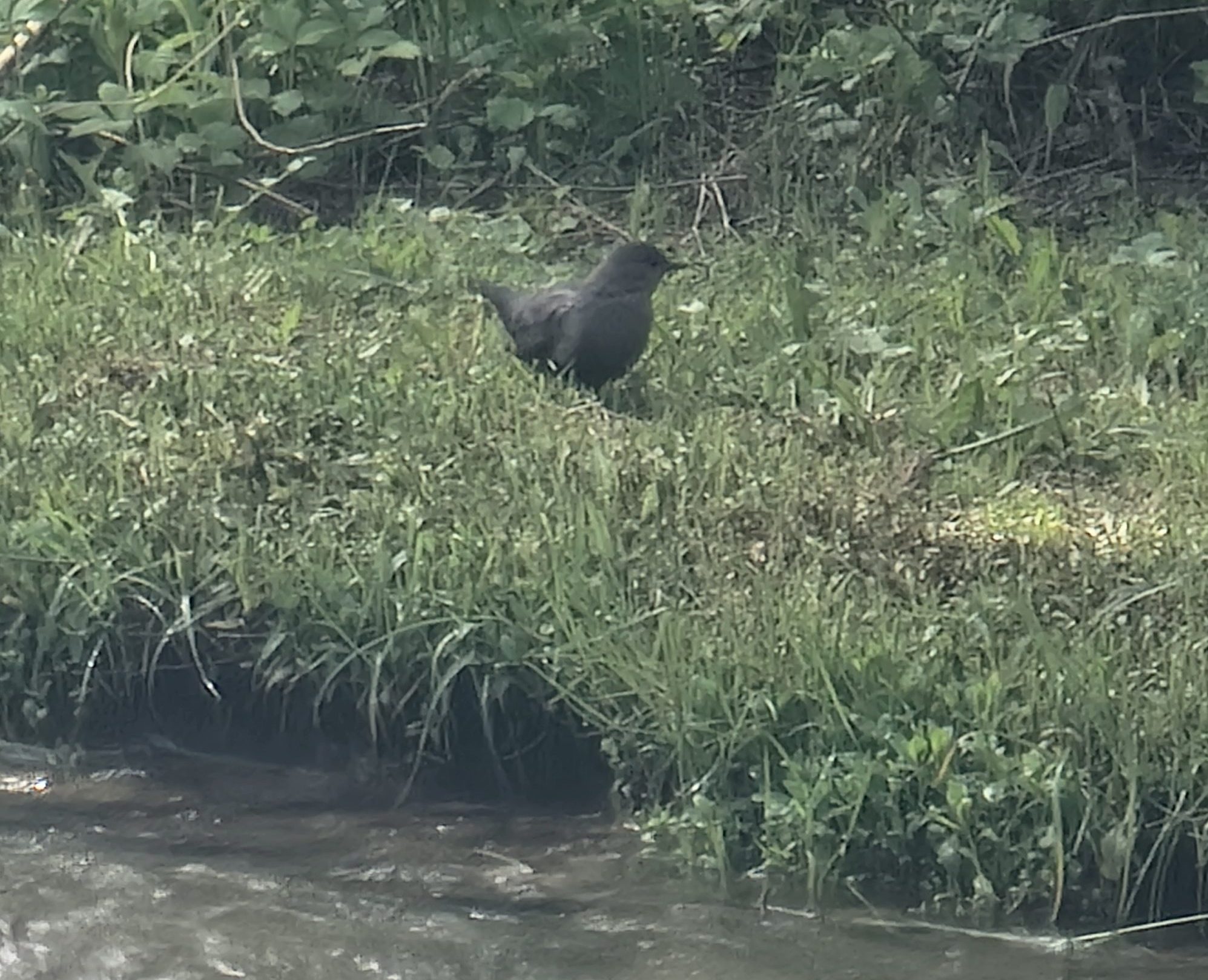
Today’s update is about a female we banded last summer (2024) – I am very excited to report that she survived the winter! Just a heads-up: this post includes some close-up photos of bird toes that might be a little graphic for some. Feel free to skip those if you’re squeamish.
What makes this particular female so special? Well, when we caught her last year, we noticed she was missing some toes. On her right foot, all that remains is the tarsometatarsus—the main foot bone. If you’re not familiar with bird anatomy, that’s the part that often looks like a lower leg. (It’s pretty common for people to mistake a bird’s ankle for a backwards-facing knee!) We couldn’t place any bands on her right leg because they slid right off!
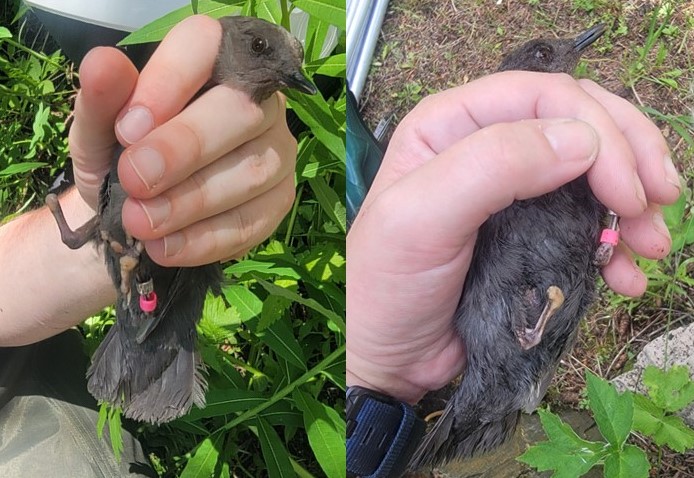
On the left side, only the halux was fully in tact. The remaining digits were missing most or all of the toenail. In 2024, it looked like the toes had blistered, though the skin itself was dry and flaky. This year, the flakiness is gone and the tissue has hardened.
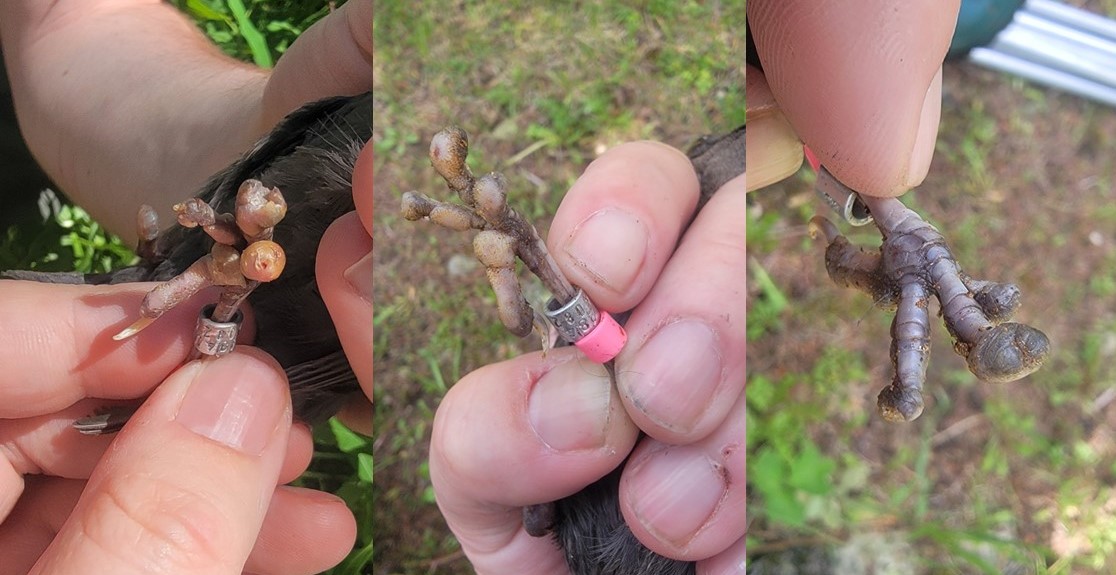
My best guess is that she had a cutaneous bout of avian pox that has since resolved. Avian pox viruses are found nearly worldwide – everywhere except the Arctic and Antarctic – and are especially common in songbirds. The virus is highly transmissible between birds and can also appear in a more serious ‘wet’ form that affects the respiratory tract. Mosquitos are the most common vectors, but the virus can also spread through close contact, especially if there are abrasions to the skin. Interestingly, the female’s partners in both years have shown no visible signs of cutaneous pox. Of course, we haven’t seen last year’s male again, so perhaps he just wasn’t showing symptoms yet. While avian pox is not transmissible to humans, we made sure to sanitize thoroughly after handling and only handled this pair that day.
She came back to the same nest box as last year and laid five eggs, but unfortunately, the nest had failed when we checked it today. Given the box’s location—on a low bridge over shallow water—predation seems the most likely explanation. We had a camera set on this nest, so we’ll be doing our best to figure out what happened. It’s a tough outcome, especially after everything she’s been through, but her return alone still feels like a small victory.

Citations:
Background information on Avian Pox is from Cornell’s Wildlife Health Lab: https://cwhl.vet.cornell.edu/disease/avian-pox#collapse31
 Black Hills Dipper Diaries
Leave a comment